Boyertown High School Outreach
Dear Chris,
On behalf of the Friends of Chamber Music of Reading (FOCM), I thank you for hosting the Daedalus Quartet including their guest pianist, Wyomissing native Matt Bengtson.
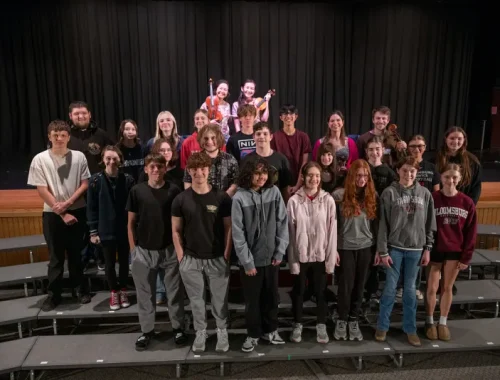
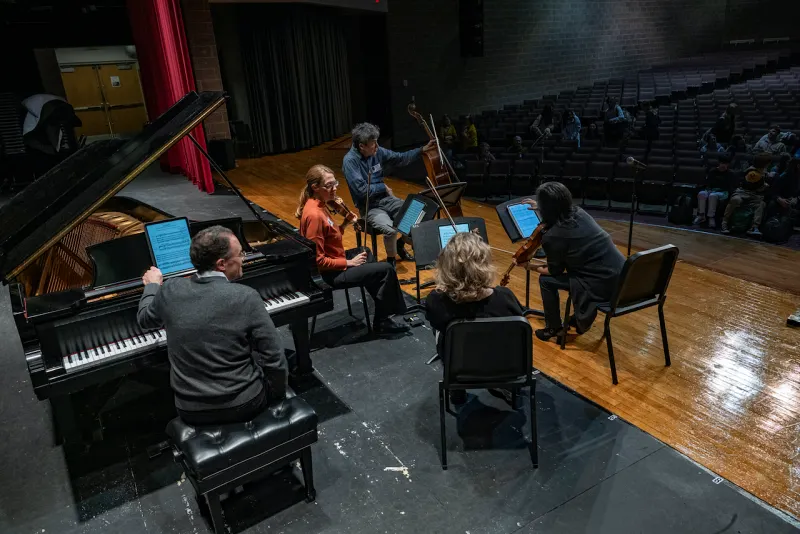
The Auditorium was set up as requested with Steinway piano on stage, music stands, chairs, piano bench for the cellist’s seat, hand held microphones available and approximately 100 interested music students in attendance from orchestra (60), music theory (10), show choir (30) and wind ensemble (40).
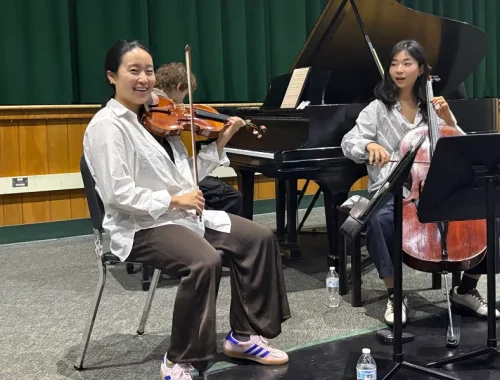
Min-Young Kim, first violinist, introduced her colleagues, Matilda Kaul, second violin, Jessica Thompson, viola, Thomas Kraines, cello and Matt Bengtson, piano after performance of the first movement of Brahms’ Quintet for Piano and Strings in F minor, Op. 34.
Contrasting with the serenity and familiarity of Brahms, “Measure”, a piece composed for Daedalus by their friend, Luke Carlson, commanded listener attention. The musicians explained that each of the four movements is a metaphor for the craft of composition. In the composer’s words, “Composing music consists of marking time, constructing sonorities, delineating form and contemplating proportions…” , revealing the “measure” of the piece. The first movement, “Dimensions – Line” employs different rhythms happening simultaneously, lots of repetitions performed intentionally not together, and echoing sounds. Min aptly described passages from it saying, “The scales in this piece will help us warm up!”
The second movement, entitled “Mechanics – Object” was described as a “breakdown” of an apparatus – in this case, the piano? We were asked by Tom to figure out the time signature while listening to rhythmic bow stick and snapping sounds created by both the stringed instruments and from inside the piano. The intrigued students heard time signatures of 8/4, 5/4, 4/4 and one said the music sounded like that of “Studio Ghibli”. We learned that the rhythms of this movement mimicked those of Maurice Ravel’s Piano Trio, where the strings use 4/4 against the piano’s ostinato 7/8 even with irregular rhythms within its 7/8 meter. If one attends this evening’s full length performance at 7:30pm at the WCR, they will be treated to the piece’s world premiere with the composer in attendance!
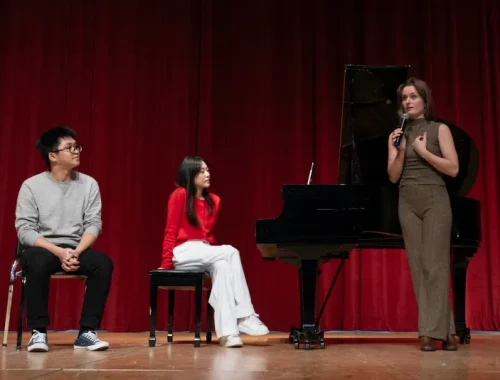
The artists welcomed and encouraged students’ questions and impressions of what they were hearing and feeling. One asked how the musicians worked together without a conductor. Matilda told of the knowledge each of them had of their own part plus those of their colleagues, including their body language and personal habits enabling all to subconsciously move together to feel the pulse of the piece. Accessing music on their IPads has become a bonus to easily locate passages for rehearsal.
We were treated to a “joke”, as Jessica explained the translation of “Scherzo”, the entitled third movement of the Brahms Quintet heard at the beginning of their presentation. Characteristic of a “scherzo”, it is a quick movement. It began quietly with rhythmic cello plucks introducing a calm melody before a sudden eruption into a triumphant sounding theme that returns to calm but ends with a repeated, insistent two note figure that is unresolved.
A student asked a good question about the musicians’ body movements during performance – are they necessary? what do they add? what is their “language?” The musicians described the physical necessity of moving their bows which communicates much information to their colleagues – intent, timing, emotion, all necessities to “be on the same page”. While paying attention to their own part, they constantly watch each other to further insure their “ensemble” and sound and how they want to portray the music. They demonstrated the drama of being together musically and emotionally performing the ending passages of a movement (“Dimensions”? “Tessellations”?) from “Measure”, which led to raising their bows in unison and triumph.
Because the world premiere of the work “Measure” for Piano Quintet will take place at tonight’s full length concert at the WCR, Tom questioned the audience if they had ever been part of a “world premiere”, as performer, composer, audience member.
A few had responded as composers and performers. Tom spoke of performance as individual and unique to the time, saying “this is what the piece means to me at this time”. Matt expounded on musicians’ interpretation of music stating that “music notation can’t cover it all” and that musical interpretation is expected and inevitable and that composers want their music to be performed and enjoyed by both performer and listener.
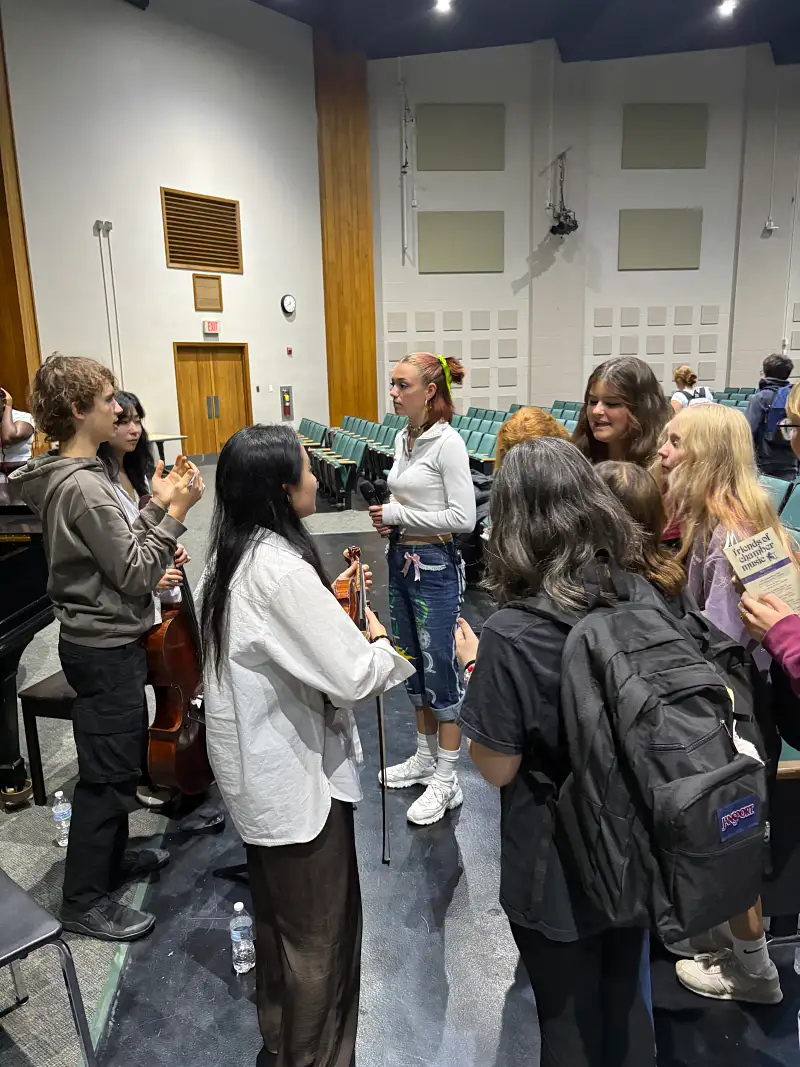
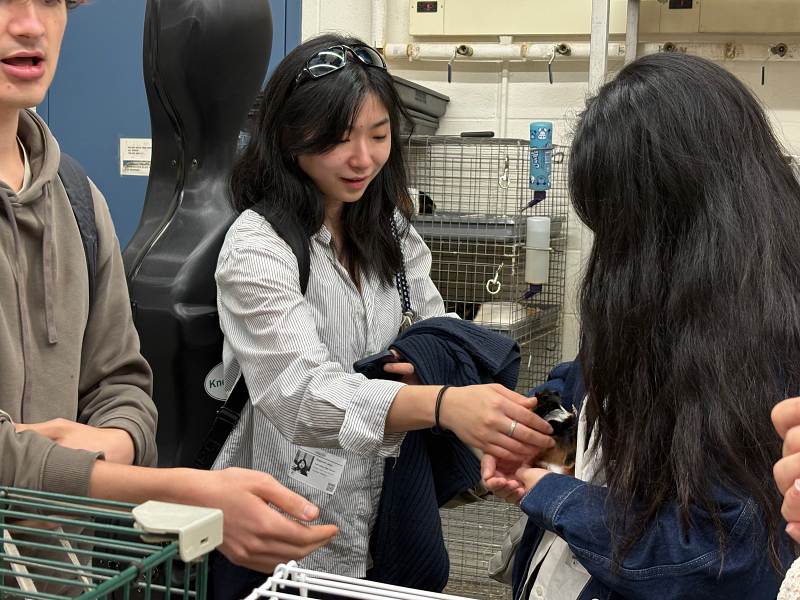
After the generous, informative presentation, students were eager to meet and converse with the performers and they, likewise, welcomed their enthusiasm and interest.
Thank you again, Chris, for nurturing and encouraging your attentive, astute students and their musical interests and for ensuring everything in place for this memorable presentation at Boyertown Area High School.
Sincerely,
Ellen Kitagawa Shapiro, Outreach committee member, FOCM